Understanding Real Estate Contingency Fees: What You Need to Know
Contingency fees are a common part of many real estate transactions, but they can be confusing for both buyers and sellers. At Team Price Real Estate we understand that navigating the world of real estate fees can be challenging, which is why we've created this guide to help you understand the ins and outs of contingency fees. Whether you're buying or selling property in the Austin area, our comprehensive guide will provide you with the information you need to make informed decisions and ensure a smooth transaction.
Contingency Fees in Real Estate: A Guide for Buyers and Sellers
A contract contingency fee is a type of fee that is often used in real estate transactions. Essentially, this fee is a contingency that is added to the contract between the buyer and seller. The fee is designed to protect the buyer in the event that something goes wrong with the transaction.
For example, let's say that you are buying a house and you have agreed to pay a certain amount of money for the property. However, before the sale can be completed, certain conditions must be met. For instance, you may need to secure financing, complete a home inspection, or resolve any outstanding legal issues related to the property.
If any of these conditions are not met, the contract contingency fee comes into play. Essentially, this fee is designed to give the buyer some protection in the event that they are unable to complete the purchase due to circumstances beyond their control.
In most cases, the contract contingency fee is a percentage of the purchase price of the property. This percentage can vary depending on a number of factors, including the type of property being purchased, the location of the property, and the overall state of the real estate market.
It's important to note that the contract contingency fee is not the same thing as the commission paid to the real estate agent or broker. The commission is a fee that is paid to the agent for their services in facilitating the transaction, while the contract contingency fee is designed to provide some protection to the buyer or the seller in the event that the transaction falls through.
The contract contingency fee is an important component of many real estate transactions, as it helps to protect the buyer and ensure that the transaction goes smoothly. If you are buying or selling a property, it's important to work with a professional who understands the ins and outs of contract contingency fees and can help you navigate this complex process.
Q: What is the typical percentage of a contingency fee?
A: The typical percentage of a contingency fee can vary depending on the industry and the specific circumstances of the transaction. In real estate, the percentage of the contingency fee is often negotiable and can range from 1% to 5% of the purchase price of the property. However, it's important to note that the percentage can vary widely depending on the market conditions and the level of competition among real estate agents.
Q: What are examples of contingent fees?
A: Contingent fees can be found in many different industries, but some common examples include legal cases, personal injury claims, and real estate transactions. In a legal case, for example, a lawyer may agree to work on a contingent fee basis, where they only get paid if their client wins the case. Similarly, in a personal injury claim, a lawyer may work on a contingency fee basis and take a percentage of the settlement or award. In real estate, a real estate agent may agree to work on a contingent fee basis, where they only get paid if they are able to sell the property.
Q: How do you explain contingency fee?
A: A contingency fee is a type of fee that is based on the outcome of a particular event or transaction. In some cases, the fee is only paid if a certain condition is met. For example, in a real estate transaction, the fee may only be paid if the property is sold. The purpose of a contingency fee is often to provide an incentive for the party receiving the fee to work harder or take more risks to achieve the desired outcome.
Q: What are the most common contingencies in real estate?
A: In real estate, there are several common contingencies that are often included in contracts between buyers and sellers. These may include a financing contingency, which requires the buyer to secure financing before the sale can be completed, an inspection contingency, which allows the buyer to have the property inspected before the sale is finalized, and a title contingency, which ensures that the property has a clear title and is free from any liens or other encumbrances. Other common contingencies may include a contingency related to the sale of another property, or a contingency related to the completion of repairs or renovations.
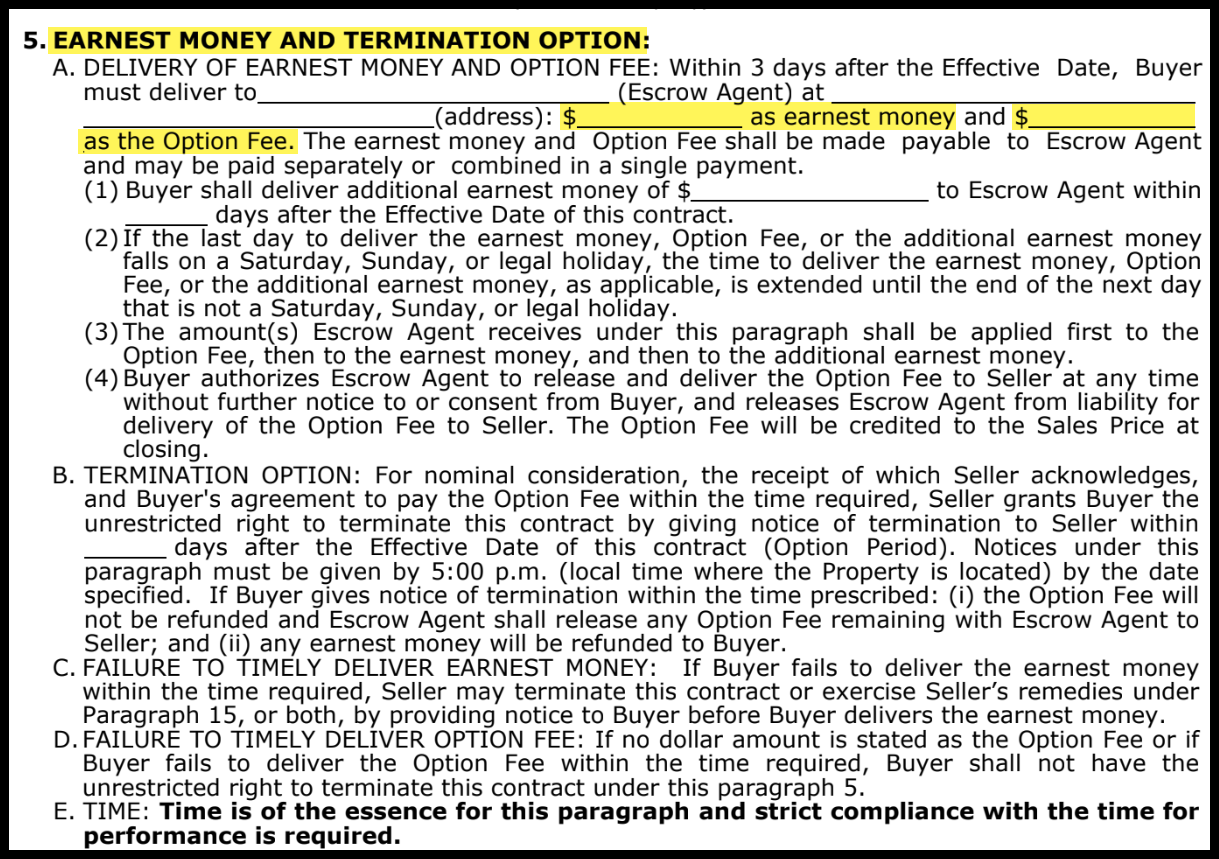
In Texas, the two most frequently encountered contingency fees in real estate transactions are the earnest money and the option money. Typically, the earnest money is equal to 1% of the sales price, while the option money is equal to 10% of the earnest money. However, it's important to note that these percentages are not set in stone and can vary depending on the specifics of each individual contract. For more information and guidance on these fees, please refer to our published guide titled "Type of Market / Type of Offer."
In Texas, the Option Period is a designated timeframe outlined in a real estate contract that allows the buyer to terminate the contract for any reason. When included in a contract, this option grants the buyer the right to end the agreement within a specified number of days for a predetermined fee, without forfeiting their earnest money deposit. The Texas Real Estate Option Period offers several key features, including:
Buyer security: The option period provides buyers with a sense of security, knowing they can back out of the contract if necessary.
Agreed-upon timeframe: The length of the option period is agreed upon in advance and is typically several days long.
Starts at contract inception: The option period begins at the start of the purchase contract period.
Consideration required: To activate the option period, the buyer must pay a non-refundable fee to the seller, known as the Option Fee.
Deadline: The option period expires at 5 p.m. local time on the designated date.
Extension possibility: The buyer and seller can mutually agree to extend the option period if necessary.
Overall, the Texas Real Estate Option Period provides buyers with an important opportunity to review the property and make an informed decision before finalizing the purchase contract.
At Team Price Real Estate, we're here to help you every step of the way. Whether you have questions about real estate contingency fees, are looking to buy or sell property in the Austin area, or just want to learn more about the real estate market, our team of experienced professionals is here to assist you. Don't hesitate to contact us with any questions or concerns you may have - we're always happy to help.